Towing Accessories & Receiver Hitches in Waco, TX
Towing well is a system, not a single part: a receiver hitch matched to the truck and rated for the load, trailer wiring that lights every circuit reliably, and safety-chain anchors that give the chains a proper structural attachment. Quality Mechanics installs and services these towing essentials at 8575 Gholson Road in Waco.
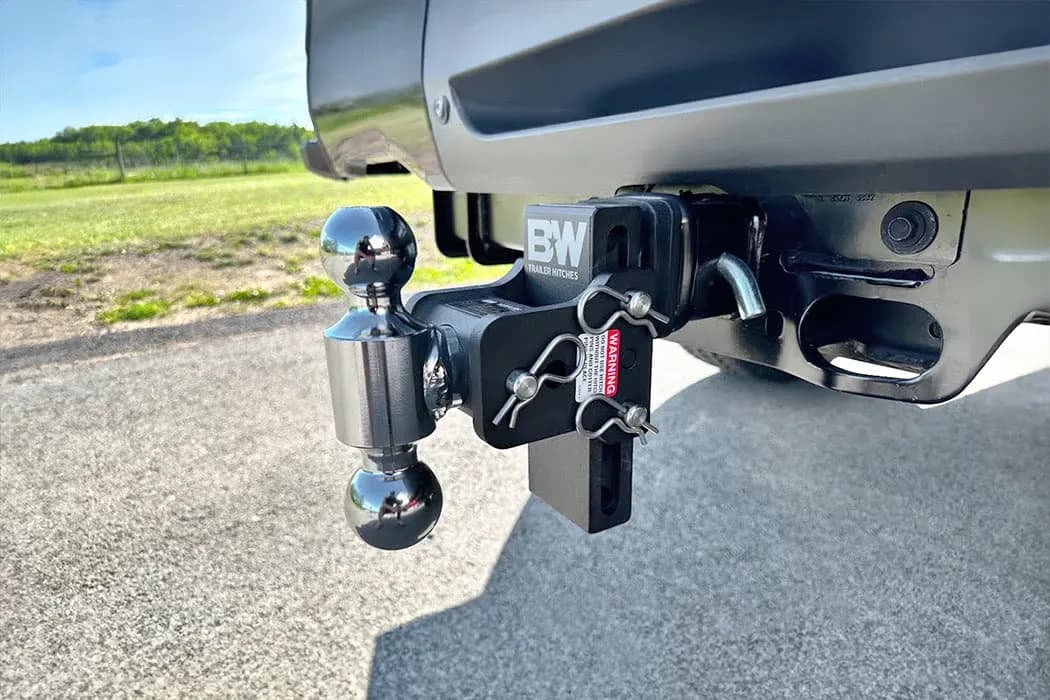
Receiver hitches are vehicle-specific, and their class and rating must suit both the truck and the trailers behind it — a hitch never raises the truck's own limits. Trailer wiring is where most towing problems actually live, so we install and repair connectors and circuits properly, with grounds that last, rather than splicing in whatever reaches.
The right towing setup depends on the truck's year, make, model, drivetrain, factory tow package and ratings, plus the trailers you pull and how often. Bring us the complete picture and we will configure the receiver, wiring and anchors around it. If your trailer has electric brakes, ask about brake-controller availability and we will discuss options for your setup.
Questions about towing accessories & receiver hitches?
Call (254) 829-5054What to Consider
- The truck has no receiver, or a rusted, undersized or damaged one
- Trailer lights flicker, drop a turn signal or fail when the trailer bounces
- The trailer connector is corroded, taped together or hanging by its wires
- Safety chains have nowhere proper to attach
- You bought a new trailer and the truck's towing equipment has not caught up
- A new-to-you truck came with towing gear of unknown quality that deserves an inspection
- You need a different ball mount, ball size or accessories to match a new trailer coupler
Why Customers Choose This
- First towing setup on a truck that did not come with a factory receiver
- Utility, boat and equipment trailers that need a properly rated receiver and reliable lights
- Chasing out chronic trailer-lighting faults from corroded connectors and bad grounds
- Upgrading worn or underrated equipment on a used truck
- Adding safety-chain anchors and hookup accessories for a complete, legal setup
- Factory tow packages vary by trim, so what a given truck needs depends on how it was optioned
Fitment & Consultation Process
- 1Record complete vehicle information, including the factory tow package and the truck's tow ratings
- 2Discuss the trailers you pull — types, approximate weights and coupler and connector styles
- 3Inspect any existing hitch, wiring and connectors for corrosion, damage and correct ratings
- 4Match the receiver class and wiring configuration to the truck and its trailers
- 5Confirm the parts list, including safety-chain anchors and any adapters, before ordering
Installation Process
- 1Install the vehicle-specific receiver hitch to the manufacturer's mounting points and torque specifications
- 2Install or repair trailer wiring, with connectors mounted securely and grounds made to last
- 3Verify every trailer circuit — running lights, brake lights, turn signals and ground — at the connector
- 4Install safety-chain anchors as part of the receiver installation
- 5Road test, then torque-check the receiver mounting
Safety Considerations
- A receiver hitch is rated equipment, and towing must remain within both the hitch rating and the vehicle manufacturer's towing and weight limits — installing a higher-class receiver does not raise the truck's capacity
- Safety chains are required equipment and need proper anchors, crossed under the coupler at hookup
- Trailer-lighting faults are a safety and legal problem, not a nuisance; intermittent circuits should be repaired before the next tow
When to Have It Inspected
Do not tow on a hitch that shifts in its mounts, a connector that drops circuits when wiggled, or a ball mount with visible cracks or heavy rust pitting. Have the setup inspected first — towing failures happen at highway speed with a load behind you.
Trucks We Outfit
- Half-ton through one-ton pickups
- Midsize pickups and SUVs that tow within their ratings
- Ranch trucks pulling utility and stock trailers
- Boat and RV tow vehicles
- Fleet and service trucks
- Vans used for work towing, by application
Why Choose Professional Service
- Receiver class and wiring matched to the truck and its actual trailers
- Every lighting circuit verified at the connector before the truck leaves
- Safety-chain anchors and hookup gear handled in the same visit
- Existing towing equipment inspected honestly — we tell you what is fine as well as what is not
- A local shop that can service the truck's brakes and suspension behind the towing work
Serving Waco & Central Texas
Between the lakes, the sale barns and the jobsites, trailers are simply part of driving around Waco. Much of our towing work is preventive: getting the wiring, receiver and chains on a Central Texas truck up to the standard its trailers deserve before a long haul down I-35 finds the weak point.
Frequently Asked Questions
What class of receiver hitch do I need?
Receiver class depends on the truck and the trailers you pull. The hitch must be rated for the load, and the combination must also stay within the vehicle manufacturer's towing and weight limits — the lower of the two governs. We match the class to your complete picture rather than defaulting to the biggest available.
Why do my trailer lights keep acting up?
Most chronic trailer-lighting problems trace to corroded connectors and poor grounds rather than the bulbs. We repair the circuits and grounds properly and verify every function at the connector, which resolves the majority of intermittent faults we see.
Do you install brake controllers?
If your trailer has electric brakes, ask about brake-controller availability and we will discuss options for your setup and what your truck already has from the factory.
Does a bigger hitch let me tow more?
No. A hitch rating does not increase the truck's towing capacity. The vehicle manufacturer's towing, payload, axle, tire and gross combined weight ratings still apply, and the working limit is the lowest-rated component in the setup.
How long does hitch installation take?
Installation time depends on the vehicle, product, parts availability and any alignment, wiring or calibration requirements. We will provide scheduling information after confirming the complete installation.
Related Services
Request an Upfitting Quote
Find the Shop
8575 Gholson Road, Waco, TX 76705
Get DirectionsReady to Get It Fixed?
Call the shop or request an appointment online — we serve Waco and communities within about 25 miles.