Suspension Repair in Waco
Your suspension does two jobs at once: it keeps the ride comfortable, and it keeps the tires planted on the pavement so you can steer and stop. Shocks, struts, springs, ball joints, control arms, and bushings all wear gradually, which is why many drivers do not notice how bad the ride has gotten until a part finally fails or the tires wear out early.
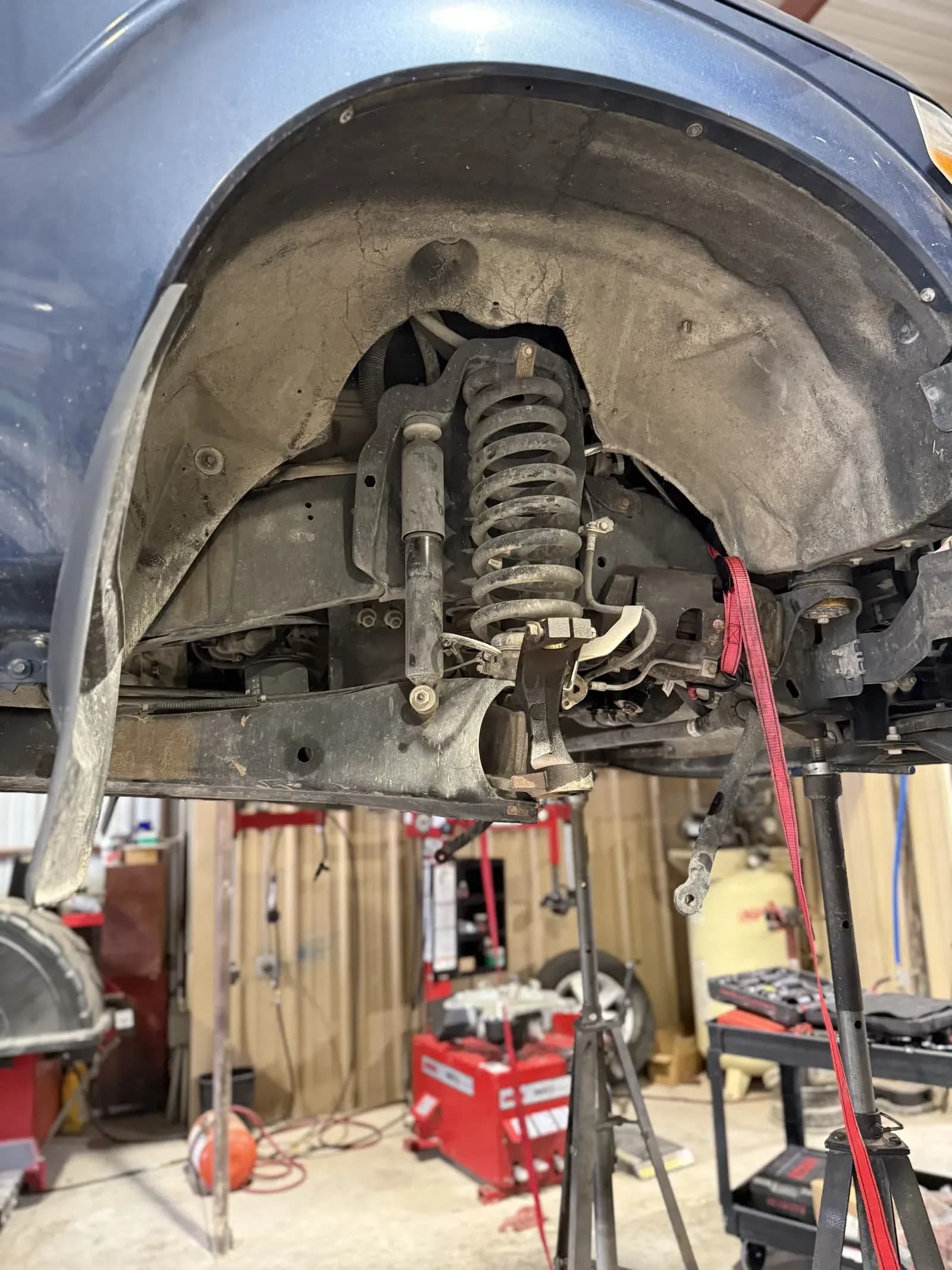
Quality Mechanics diagnoses and repairs suspensions on everything from commuter cars to three-quarter-ton trucks that spend their days loaded. We inspect the whole system, not just the part that is making noise, because suspension components work together and a single worn bushing can take out its neighbors.
Central Texas roads do not do suspensions any favors, and vehicles used for towing or jobsite work carry loads that accelerate wear. If your vehicle clunks over bumps, floats after dips, or sits low on one corner, it is time for an inspection.
Questions about suspension repair?
Call (254) 829-5054Warning Signs
- Clunks, rattles, or knocking over bumps and rough pavement
- A bouncy or floaty ride that keeps moving after a dip
- Nose dive under braking or squatting under acceleration
- One corner of the vehicle sitting lower than the others
- Cupped or scalloped tire wear patterns
- Wandering or vague steering, especially with a load or trailer
- Visible fluid leaking from a shock or strut body
Common Causes
- Shock and strut wear from mileage, heat, and rough roads
- Ball joints and tie rod ends loosening with age and load
- Control arm and sway bar bushings drying out and cracking
- Springs sagging or breaking, especially on trucks that haul
- Pothole and curb impacts bending or damaging components
- Rust and grit working into joints on gravel-road vehicles
Our Diagnostic Process
- 1Discuss the noises, ride changes, or handling issues you have noticed
- 2Measure ride height and look for sag or lean at each corner
- 3Inspect shocks and struts for leaks, damage, and worn mounts
- 4Check ball joints, tie rods, and bushings for play with the vehicle on a lift
- 5Road test over varied surfaces to confirm the source of noises
- 6Present findings with a prioritized estimate before any work begins
How We Handle the Repair
- 1Replace worn shocks, struts, springs, or joints per the approved estimate
- 2Replace components in matched pairs where appropriate for balanced handling
- 3Torque all fasteners to specification with the suspension at ride height
- 4Check and set wheel alignment, since suspension work changes geometry
- 5Road test to verify ride quality and confirm the noises are gone
Safety Considerations
- Worn shocks lengthen stopping distances because the tires spend less time firmly on the road
- A separated ball joint can let the wheel fold under the vehicle without warning
- Suspension wear is gradual, so have it inspected periodically rather than waiting for a failure
When You Should Stop Driving
Stop driving if you hear a loud pop or grinding from a wheel followed by a change in handling, if a corner of the vehicle suddenly drops, or if the steering develops severe looseness. These can be signs of a broken spring or a failing ball joint, and a complete separation at speed can cause loss of control.
What We Service
- Passenger cars and crossovers
- SUVs used for families and towing
- Half-ton through one-ton pickups
- Work trucks carrying tools, beds, or racks
- Vehicles driven daily on rural and gravel roads
Why Choose Professional Service
- Restored ride comfort and quieter operation over rough roads
- Shorter, more stable braking with tires kept firmly on the pavement
- Even tire wear and longer tire life
- Confident handling when towing or carrying loads
- Whole-system inspection so related worn parts are caught in one visit
Serving Waco & Central Texas
Suspension wear is a fact of life around Waco. Chip-seal and gravel roads across rural McLennan County hammer shocks and bushings, potholes on city streets and frontage roads deliver sharp impacts, and the trucks we see off Highway 6 and Highway 84 often spend their weeks loaded with feed, tools, or trailers. Add summer heat that dries out rubber bushings, and Central Texas vehicles simply need suspension attention sooner than the owner manual might suggest.
Frequently Asked Questions
How long do shocks and struts last?
It varies widely with roads, loads, and driving style, and rough rural roads or frequent towing shorten the interval considerably. Rather than relying on a fixed mileage, we inspect for leaks, worn mounts, and ride degradation and show you what we find.
Do I have to replace shocks or struts in pairs?
Replacing them in pairs across an axle is the standard practice, because a new unit paired with a worn one gives uneven damping side to side. We will explain the options for your specific situation before work begins.
Will suspension repair fix my rough ride?
Often, yes, but ride complaints can also involve tires, wheels, or mounts. Our diagnosis identifies the actual cause first so you are not paying for parts that will not solve the problem.
Does suspension work require an alignment afterward?
Usually. Replacing control arms, struts, springs, or joints changes the geometry the alignment depends on, so checking and setting alignment after the repair protects your tires.
My truck squats badly with a trailer. Is that a suspension problem?
It can be. Sagging or fatigued rear springs are common on trucks that tow regularly. We can inspect the springs and discuss repair options suited to how you use the truck.
Related Services
Request Suspension Repair
Find the Shop
8575 Gholson Road, Waco, TX 76705
Get DirectionsReady to Get It Fixed?
Call the shop or request an appointment online — we serve Waco and communities within about 25 miles.