Heavy-Equipment Preventive Maintenance in Waco, Texas
Heavy equipment rewards maintenance more than almost anything else you can own. The difference between a machine that gives ten thousand good hours and one that dies young is rarely luck — it is fluids changed on time, filters that actually stopped the dust, grease in the pins, and small problems caught at inspection instead of discovered at failure. Quality Mechanics provides preventive maintenance for construction and agricultural equipment across the Waco area with exactly that difference in mind.
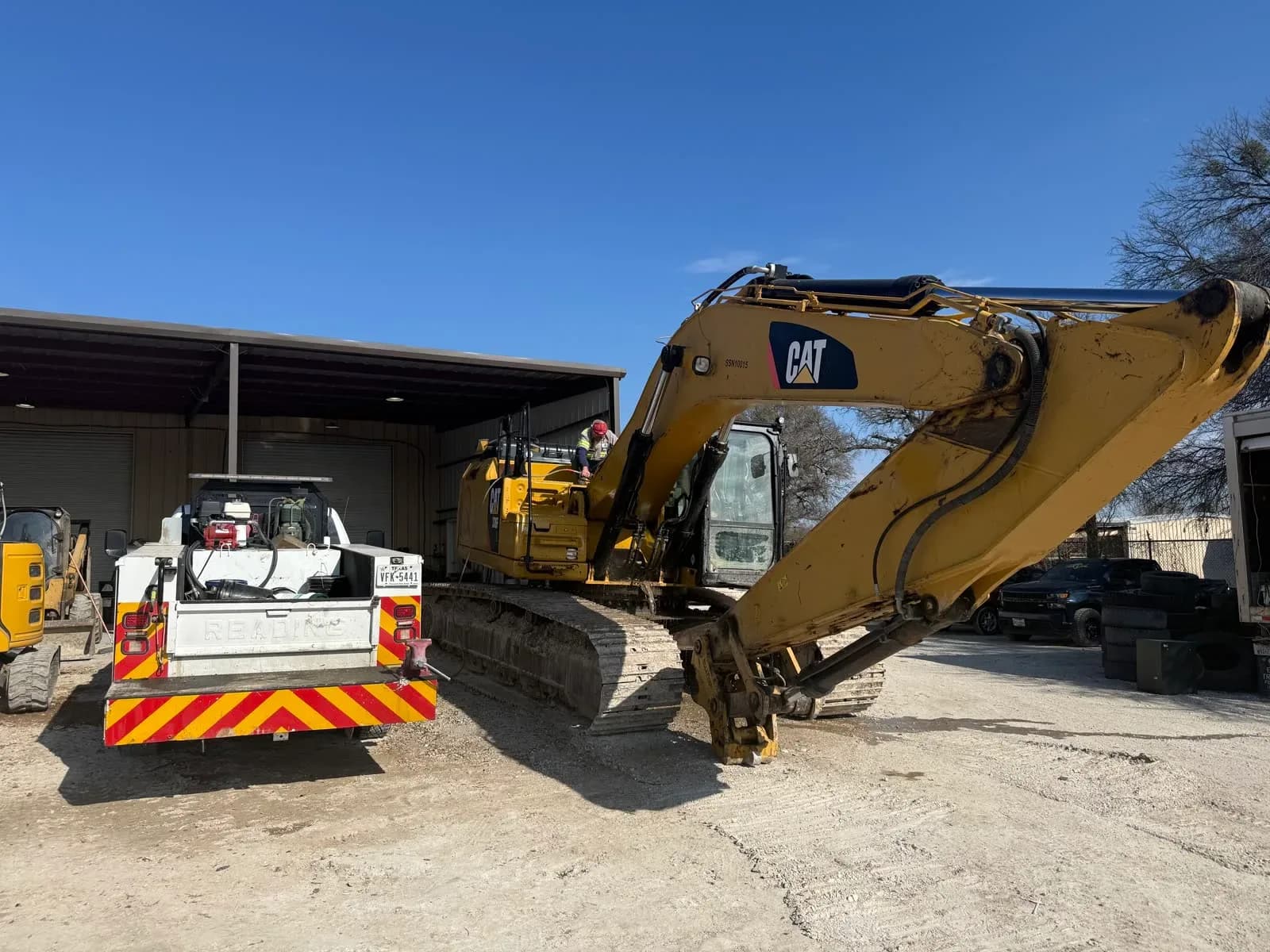
Central Texas working conditions compress maintenance intervals. Dust loads air and hydraulic filtration harder than the manual’s assumptions, heat ages oil and coolant faster, and the wet-dry swing of local ground conditions works pins, bushings, and undercarriages hard. We build maintenance around how and where your machine actually works — hours, environment, and load — not just the sticker on the door.
Whether you run one tractor or a small fleet of machines across jobsites, we can put your equipment on a maintenance rhythm: scheduled fluid and filter services, greasing and adjustment, and inspections that catch hose wear, leaks, and loose pins while they are still cheap. Every visit is documented, so each machine carries a service history that supports its resale value.
Questions about heavy-equipment preventive maintenance?
Call (254) 829-5054Warning Signs
- Nobody is sure when the hydraulic oil or filters were last changed
- Grease intervals happen when someone remembers, not on a schedule
- Radiators and coolers visibly packed with dust, chaff, or debris
- Hoses showing cracking, rub-through, or weeping at the fittings
- Machines starting harder or running hotter than they did last season
- Undercarriage, pins, or couplers developing play that keeps growing
- Repair spending dominated by breakdowns instead of scheduled service
Common Causes
- Service intervals stretched during busy season — the exact time machines wear fastest
- Filters run past capacity in dust conditions the factory schedule never assumed
- Hydraulic oil degraded by heat and contamination, quietly wearing every component it touches
- Missed greasing that lets dirt grind in pins and bushings
- Coolant neglected until the first hundred-degree week finds the weak point
- Machines stored between seasons without preparation, breeding fuel and battery problems
- No inspection routine, so hose wear and small leaks go unseen until they let go
Our Diagnostic Process
- 1Review each machine: model, hours, work environment, and its maintenance history so far
- 2Perform a baseline inspection — fluids and their condition, filters, hoses, pins, undercarriage, cooling, electrical, and attachments
- 3Sample or assess fluid condition to judge whether intervals have been keeping up with conditions
- 4Separate findings into immediate needs, near-term items, and normal-wear watchpoints
- 5Set service intervals matched to the machine’s actual duty — hours, dust exposure, and load
- 6Agree on a schedule that fits your season and workload
How We Handle the Repair
- 1Complete scheduled services: engine oil, hydraulic oil, coolant, fuel and air filtration per the machine’s intervals
- 2Grease all service points and adjust components that require periodic attention
- 3Clean cooling packages so heat rejection is ready for the temperatures ahead
- 4Inspect hoses, pins, undercarriage, and electrical systems at every service and report findings in writing
- 5Perform approved corrective work found during inspection, planned around your operating schedule
- 6Update the machine’s service record and set the next interval before it leaves
Safety Considerations
- Inspections exist to catch failures that hurt people — hydraulic hoses near operators, worn pins under load, and brakes on machines that travel
- Lower attachments, relieve pressure, and lock out machines before maintenance work; the routine nature of a service does not make the machine less dangerous
- Do not put off a leaking hose found at inspection — pressurized hose failures can injure whoever happens to be close when they let go
When to Shut It Down
Between services, shut a machine down if it overheats, loses hydraulic function, develops a fast leak, or starts making new drivetrain noise. Preventive maintenance shrinks the odds of a failure but never to zero, and running through a warning sign wipes out everything the maintenance was protecting.
What We Service
- Excavators and mini excavators
- Skid steers and compact track loaders
- Wheel loaders and backhoes
- Agricultural tractors and implements
- Dozers and tracked machines
- Attachments serviced alongside the machines that run them
Why Choose Professional Service
- Longer component life through fluids and filtration kept ahead of Texas dust and heat
- Failures caught at inspection prices instead of breakdown prices
- Machines ready when the season starts, instead of revealing problems in the first week
- A documented service history that supports resale value
- Maintenance scheduled around your work calendar, not against it
Serving Waco & Central Texas
Ask anyone who runs equipment around Waco: the land sets the maintenance schedule. Caliche dust and cracked-black clay in drought, mud after every storm, and summer heat that keeps hydraulic and coolant temperatures pinned high for months. Machines working I-35 corridor construction or rural McLennan County ground breathe more dust and shed more heat than most factory intervals assume. Preventive maintenance calibrated to Central Texas conditions is the difference between a machine that makes the season and one that spends it in the shop.
Frequently Asked Questions
How often should my machine be serviced?
By hours and conditions, not the calendar alone. A machine working in heavy dust may need filtration attention well before the book interval, while a lightly used machine may go longer. We look at the machine, its hours, and where it works, then recommend intervals on that basis.
Can you maintain several machines on a schedule?
Yes. We can rotate multiple machines through on a planned cadence so your equipment stays covered without everything being down at once. Call (254) 829-5054 and we will work out the rotation.
What does a maintenance visit cost?
It depends on the machine and the services due, so we provide estimates after seeing the equipment and its history. A baseline inspection is the usual starting point for putting real numbers on a plan.
My machine sits all winter. Should anything be done before storage?
Yes — storage is when fuel problems, flat batteries, and seal issues develop. Talk to us before parking a machine for the season and again before returning it to work, and we can help you avoid the classic first-week-of-spring breakdown.
Will you tell me if you find something wrong during a service?
Always, and in writing. Findings are separated into what needs attention now, what should be scheduled soon, and what we are simply watching, so you decide with clear information and no surprises.
Related Services
Request Heavy-Equipment Preventive Maintenance
Find the Shop
8575 Gholson Road, Waco, TX 76705
Get DirectionsReady to Get It Fixed?
Call the shop or request an appointment online — we serve Waco and communities within about 25 miles.